DFM & Moldflow analysis for injection molding.
Identify part and tooling risks before they become steel corrections, missed trials or unstable production.
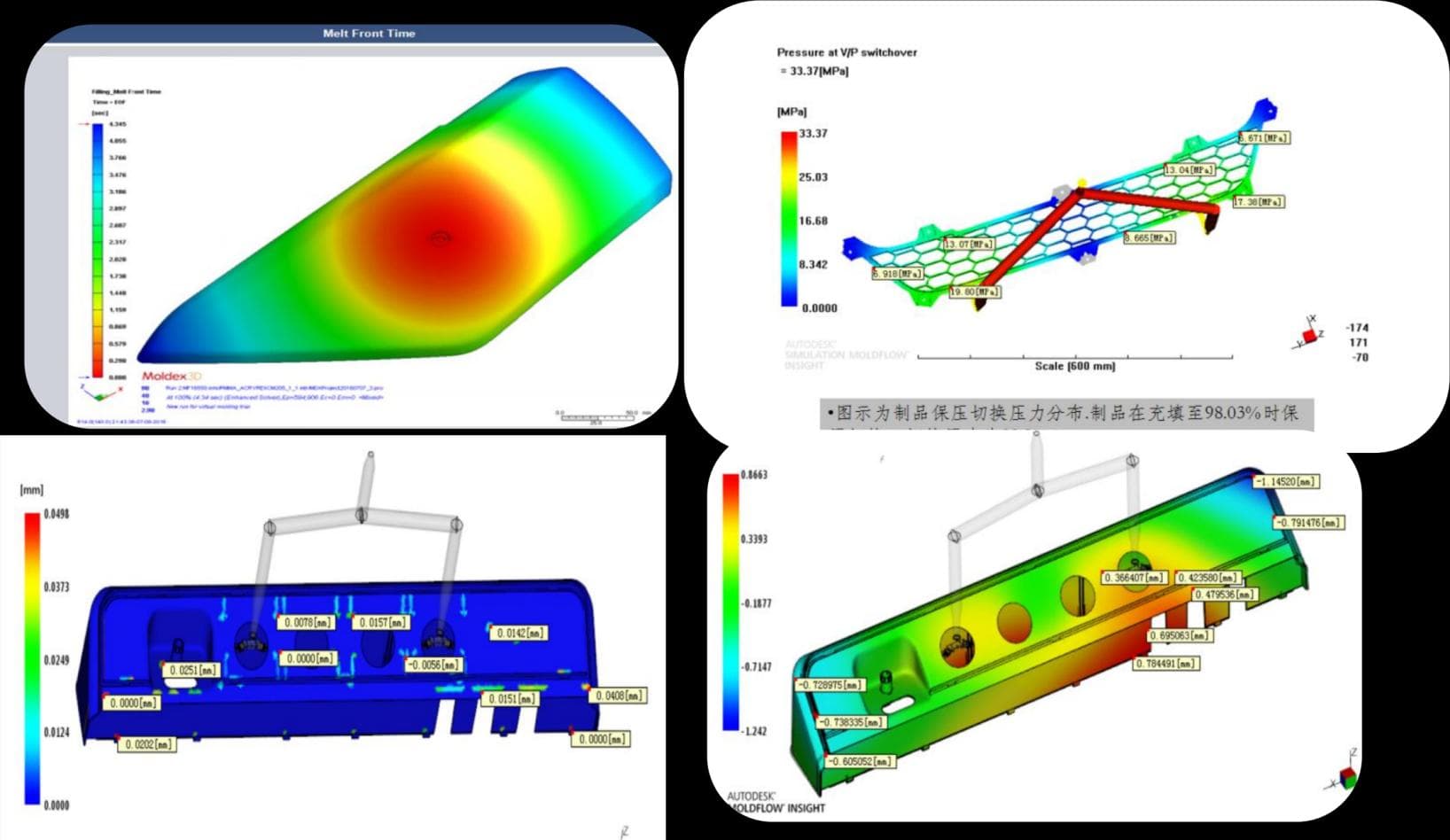 Real partner-factory material
Part feasibility is more than a pass-or-fail answer.
The review should explain where the design creates molding or tooling risk, why it matters, and which change or tooling strategy could resolve it. The scope is agreed to suit the project; not every part needs every analysis.
- Draft and release direction
- Undercuts, slides and lifters
- Wall thickness and ribs
- Parting line and cosmetic surfaces
- Gate and ejector strategy
- Material and shrinkage considerations
Use simulation when it can change a tooling decision.
Simulation may evaluate filling pattern, pressure, weld lines, air traps, temperature, cooling balance and deformation. Results should be interpreted alongside part geometry, resin data, tool design and the target machine.
- Fill and pressure
- Weld lines and air traps
- Cooling balance
- Shrinkage and warpage

Typical engineering outputs
Depending on scope, a buyer may receive annotated findings, recommended part changes, the proposed tooling concept, analysis images and open questions for approval before steel procurement or machining begins.
Quotation and analysis timing depends on part complexity, available input data and the agreed review scope.
Send the part. Start with an engineering conversation.
Share CAD, drawings or a project description. The tooling team will confirm what is needed for a useful review and quotation.